
Dermatological Treatments
Rosacea
Rosacea is not a passing flush but a chronic skin condition that needs to be managed.
Overview
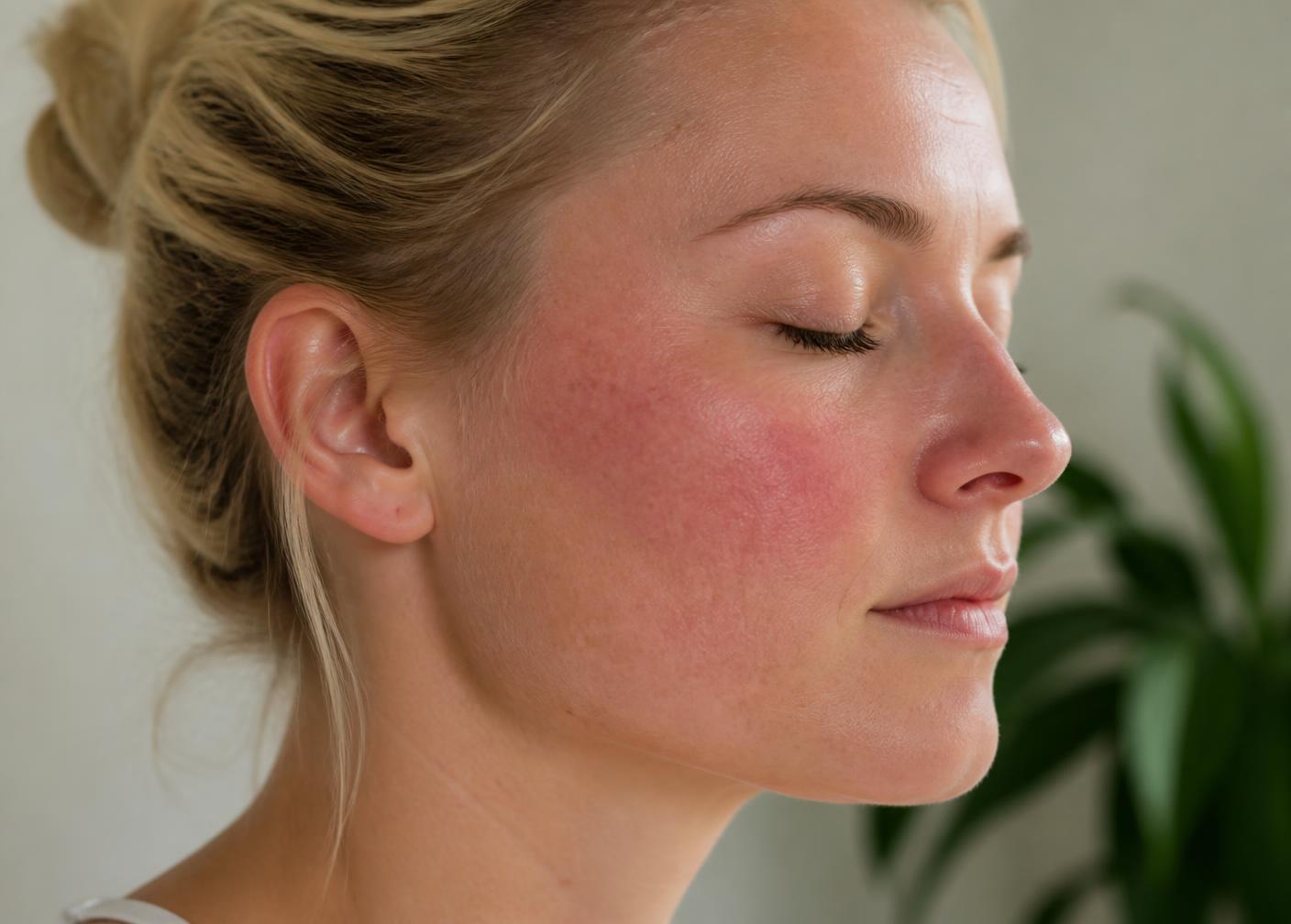
Rosacea is a chronic skin disease marked by persistent redness on the cheeks, nose, forehead and chin, sudden flushing, prominent capillaries and, at times, acne-like bumps.
Triggers differ from person to person: hot drinks, spicy food, alcohol, sudden temperature changes, stress, sun exposure and unsuitable cosmetics are the most common. The first step of treatment is therefore to map your personal triggers.
Treatment combines a barrier-friendly routine, topical and systemic medical therapy where needed, and laser or light-based sessions for persistent capillaries. The goal is not to deny the condition but to reduce flare-ups and keep the skin calm long term.
Who is it for?
- Those with persistent redness on the cheeks and around the nose
- Those experiencing sudden flushing and a burning sensation on the face
- Those bothered by prominent capillaries
- Those with acne-like breakouts that do not respond to classic acne treatment
- Skin that is highly sensitive to cosmetics and easily irritated
Treatment Information
- Examination time
- 20 – 30 minutes
- Number of sessions
- 3 – 5 sessions
- Interval
- 3 – 4 weeks
- First result
- 2 – 6 weeks
Approach
“Rosacea is not a passing flush but a chronic skin condition that needs to be managed.”
Dr. Sera Kayhan · Dermatologist
Process
How does the treatment proceed?
- 01
Diagnosis and subtype
The rosacea subtype is determined and other similar-looking conditions are ruled out.
- 02
Trigger analysis
Dietary, environmental and product-related triggers are reviewed together.
- 03
Medical treatment
Topical or systemic therapy is started alongside barrier repair.
- 04
Vascular sessions
Laser or light-based sessions are planned for persistent capillaries.
FAQ
About Rosacea
Does rosacea go away completely?+
Rosacea is a chronic condition; the aim is not to eliminate it entirely but to reduce flare-ups and keep the skin under long-term control.
Is it the same as acne?+
No. Although they look similar, the mechanism differs; classic acne treatments can increase redness in rosacea.
Do the capillaries disappear?+
Prominent vessels do not disappear with medical treatment alone; they can be markedly reduced with laser or light-based sessions.
Which products should I use?+
Alcohol-free, fragrance-free, barrier-supporting cleansers and moisturisers, plus high-factor sunscreen in every season.
Do I need to change my diet?+
A fully restrictive diet is not necessary; it is enough to reduce the triggers that cause flare-ups for you.
Dermatological Treatments
Acne and Scar Treatment
A plan that stops active acne and gradually repairs scars.
View →Diagnosis and Treatment of Skin Diseases
Skin health, barrier repair, and revitalization protocols.
View →Pigmentation Treatment
Personalized protocol for melasma, sun spots, and post-inflammatory marks.
View →Nevus (Mole) Monitoring and Removal
Dermoscopic mole checks, digital monitoring and surgical removal when needed.
View →Nail Disorders and Nail Removal
Diagnosis and treatment for fungal infection, ingrown nails and colour changes.
View →